

The perception of flavours
Which flavours can be distinguished in (flavoured) tea? Find out more about sensory perception and the flavour wheel.
Flavourings are added to our teas to give them a special smell and taste. The terms flavour and taste are often used interchangeably, but they describe impressions from two different senses that work closely together.
In order to perceive the taste experience, the brain must combine and evaluate both odour and taste impressions. Flavours are divided into gustatory and retronasal flavours according to the way they are perceived.The taste buds are concentrated in certain areas of the tongue and react to different flavour qualities: sweet, sour, salty, bitter and umami. However, without our sense of smell, these sensations would be rather one-dimensional. These additional sensory impressions contribute to the overall perception of flavour and can help to enhance the complexity and depth of a taste experience.
Aromas also play an important role in the memory and emotional connection to food, which is stored in the limbic centre in association with the experience of smell and taste. Flavours are therefore not only a sensory pleasure, but also a source of pleasure and inspiration.
The classification of flavours
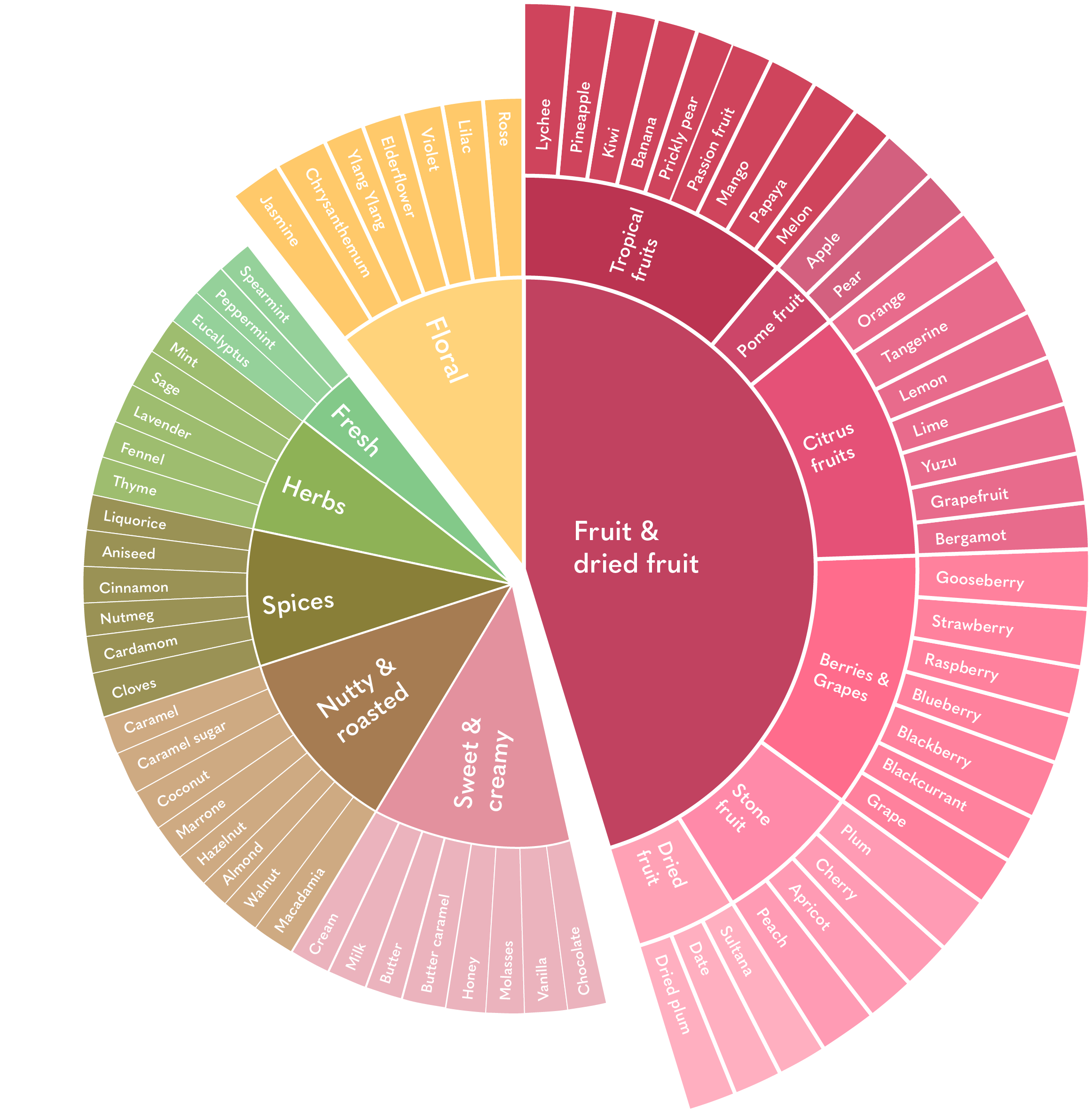
Our flavour wheel consists of concentric circles:
The classification is thus refined from the inside to the outside. In this way, the flavour of a tea can be determined in a maximum of three steps.
In this blog entry, we will initially only focus on our floral and fruity teas - we will introduce you to other teas in the other flavour classes in this year's mailings so that you can get a good overview of what should not be missing from your range.

Floral teas
Floral flavours refer to fragrance and flavour elements that are reminiscent of flowers. These flavours can be found in various foods, beverages, perfumes and other products. In the food world, especially in teas, wines, sweets and flavours, floral notes are often appreciated as characteristic flavour elements. Here are some examples of floral flavours:
- Rose: the scent of roses is sweet, floral and extremely aromatic. It is reminiscent of fresh rose petals with a slightly spicy note. The flavour of the tea is delicate and can range from subtle to intense, depending on the method of preparation. Rose tea is often described as calming and elegant.
- Violet: Violet flavour captivates with the sweet, floral aroma of violets that unfolds in a cup. The delicate, slightly powdery note gives the tea a romantic and gentle quality. A violet tea can be calming and refreshing at the same time.
- Jasmine blossom: An intense, floral aroma that comes from the jasmine flowers that are added to the tea. The fragrance is sweet, heady and reminiscent of a garden in bloom. The taste of the tea is often slightly sweet and is characterised by the distinctive jasmine note. Jasmine tea is often described as sensual, calming and seductive.
- Ylang ylang: Ylang ylang offers an exotic and sensual experience. The intense, floral flavour, coupled with a slightly fruity nuance, makes tea an aromatic journey. Ylang ylang tea can be perceived as relaxing and balancing.
Fruity teas
Fruity teas offer a wide range of flavour profiles and are popular as both hot and iced drinks. They can be enjoyed individually or combined into blends to create unique and refreshing tea creations.
- Pear: Exudes a fruity fragrance and the flavour is sweet and refreshing. The flavour of the tea is often smooth and slightly sweet with a pleasant freshness.
- Strawberry: The sweet, intense aroma of fresh strawberries is fruity and tantalising. The flavour of the tea is sweet, sometimes slightly tart and reminiscent of sun-kissed strawberries.
- Lemon: Known for its refreshing, citrus-like flavour. The flavour is juicy, lively and invigorating. The flavour of the tea is often tangy and can range from subtle to intense.
- Mandarin: Has a sweet, fresh aroma and the scent of freshly peeled mandarins. The flavour of the tea is often sweet and fruity with a pleasant citrus note.
- Mango: A tropical and exotic flavour with a sweet, intense aroma reminiscent of sunny days and tropical fruits. The mango flavour can vary from intensely tropical to fruity and creamy depending on the variety, but in general it has a characteristic scent that is often described as delicious and refreshing.
- Bergamot: BBergamot is characterised by its refreshing and slightly tart, citric aroma with a floral top note. The flavour is often subtle and lends a characteristic citrus note to black tea, for example in Earl Grey.
- Raspberry: A sweet, fruity flavour with an intense and seductive aroma reminiscent of ripe berries. The flavour of the tea is sweet and fresh with a slightly tart nuance.


Pomegranate and raspberry iced tea with mint
Here's a refreshing recipe idea for a drink with a pomegranate and raspberry tea that tastes of tangy raspberry:
Ingredients:
- #89767 Apple Dream® Moringa-Pomegranate-Raspberry
- 1 litre of water
- Fresh raspberries
- Juice of 1 lemon
- Fresh mint leaves
- Ice cubes
- Optional: Honey or agave syrup to sweeten
Instructions:
- Bring the water to the boil and pour it over the tea in a heatproof jug or bowl.
- Leave the tea to infuse for 6-10 minutes and then remove.
- Allow the tea to cool to room temperature and then place in the fridge for at least 2 hours to cool completely.
- Once the tea is chilled, add the fresh lemon juice and stir well.
- If desired, add honey or agave syrup and stir until dissolved.
- Fill glasses with ice cubes and some fresh raspberries and mint leaves.
- Pour the moringa-pomegranate-raspberry tea over the ice and fruit.
- Garnish with additional raspberries and mint leaves and serve immediately.
Enjoy this delicious and refreshing iced tea on a warm day or on any occasion when you need a delicious refreshment!